Designing High-Performance Acoustic Enclosures: Balancing Attenuation, Space, and Access
Sensitive equipment is the heart of many advanced industries, from semiconductor manufacturing to defense technology. This equipment often requires a quiet environment to function correctly. At the same time, industrial machinery can produce high levels of noise that are harmful to personnel and violate safety regulations. The solution is often a specialized structure built to control sound. An effective acoustic enclosure design is a critical engineering task that requires a careful balance of competing priorities.
Engineers must create a solution that provides maximum sound reduction (attenuation) while fitting within tight physical spaces and allowing for practical operator access. Achieving all three goals is the mark of a successful project. This article explains the core principles behind a high-performance acoustic enclosure design and how engineers balance these three critical factors to create effective, functional solutions.

What Is an Acoustic Enclosure?
An acoustic enclosure is a purpose-built structure that isolates a piece of equipment or an area from sound. Its function is twofold:
1. Protecting sensitive equipment: It can shield delicate instruments, like those used in research labs or semiconductor facilities, from disruptive external noise and vibration.
2. Containing loud noise: It can surround a loud machine, such as a generator or industrial pump, to prevent harmful noise levels from reaching workers and adjacent areas.
A successful acoustic enclosure design goes beyond simply putting a box around a machine. It involves a detailed understanding of sound, materials, and the operational needs of the facility.
The Three Pillars of Effective Acoustic Enclosure Design
Every project presents a unique engineering challenge, but the fundamental goals remain the same. The success of any acoustic enclosure design depends on balancing three key pillars:
– Attenuation: The amount of sound the enclosure can block.
– Space: The physical footprint the enclosure occupies.
– Access: The ability for personnel to operate and maintain the equipment inside.
An imbalance in any of these areas results in a failed design. An enclosure with great sound attenuation is useless if it takes up too much space or if no one can get inside to service the machine.
Pillar 1: Maximizing Sound Attenuation
Sound attenuation is the reduction in sound intensity, measured in decibels (dB). The primary goal of an acoustic enclosure design is to achieve a specific level of attenuation. This is accomplished through several key principles.
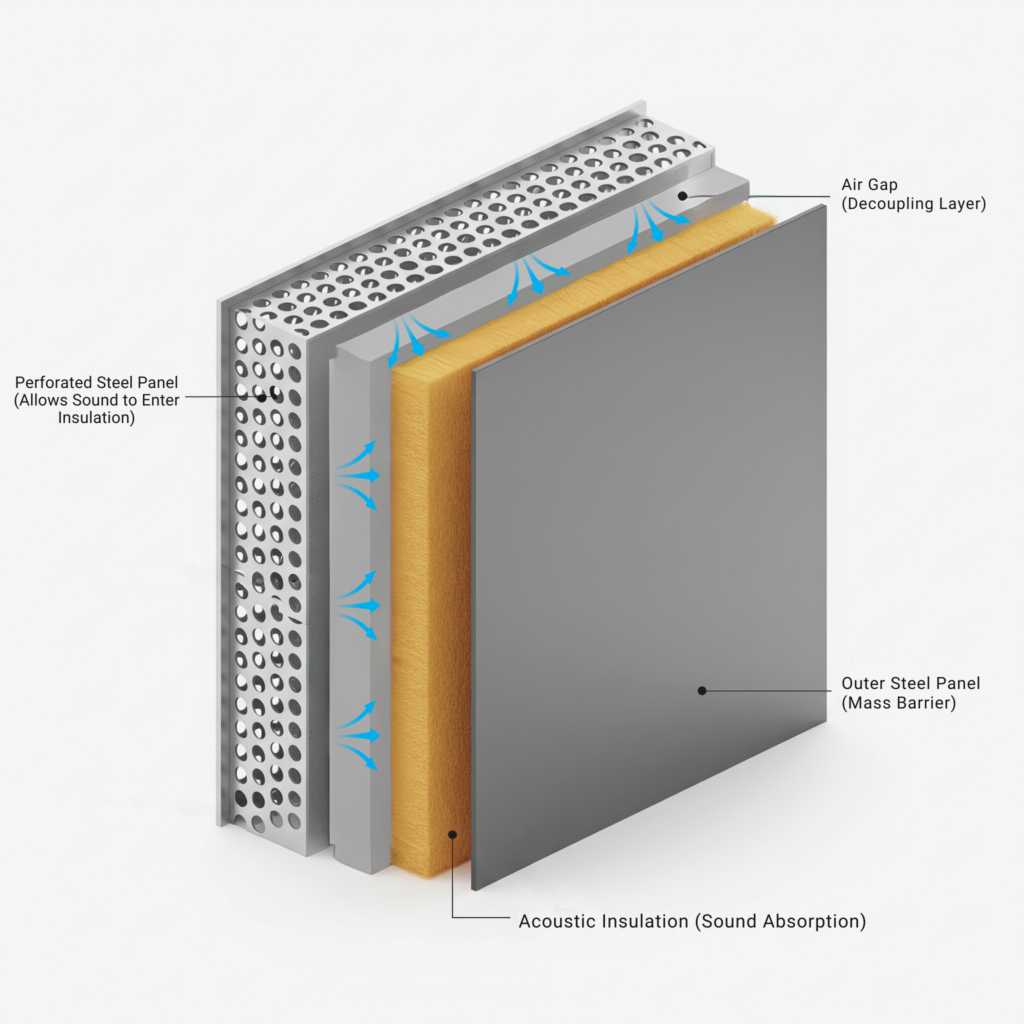
The Role of Mass and Density
The first rule of blocking airborne sound is mass. Heavy, dense, and rigid materials are effective at stopping sound waves from passing through them. This property is measured by a rating called Sound Transmission Class (STC). A higher STC rating means more sound is blocked. An expert consultant will select materials like heavy-gauge steel, concrete, or composite panels to build the walls and roof of the enclosure. For more information on how materials are rated, you can review the standards for STC ratings.
The Importance of Absorption and Decoupling
While mass blocks sound, absorption soaks it up. The interior of an acoustic enclosure is typically lined with absorptive materials, such as mineral wool or fiberglass. These materials trap sound waves, reducing echo and reverberation inside the enclosure.
Furthermore, an effective acoustic enclosure design must account for structure-borne noise, which is vibration that travels through solid materials. Decoupling is the technique of separating the enclosure’s structure from the building floor or the machine itself. This is done using specialized vibration isolation mounts or by creating an air gap between layers, which breaks the path for vibration to travel.
Sealing Leaks: The Weakest Link
Sound is like water; it will find any crack or opening to escape. A tiny gap can compromise the performance of an entire enclosure. A professional acoustic enclosure design ensures that all potential sound leaks are sealed. This includes using high-performance acoustic seals and gaskets around doors, windows, and any pass-throughs required for cables, pipes, or ducts.
Pillar 2: Working Within Space Constraints
In most industrial facilities, R&D labs, or mechanical rooms, floor space is a premium commodity. An off-the-shelf enclosure rarely fits perfectly. This is where a custom acoustic enclosure design provides significant value.

Custom Footprints for Tight Spaces
An engineering consultant can design an enclosure with a custom footprint that fits precisely within the available area. The design can be shaped to accommodate existing columns, pipes, or other infrastructure, maximizing the use of space without disrupting facility operations. This level of customization is impossible with pre-fabricated solutions.
Integrating Ventilation Without Compromising Performance
Most machinery generates heat and requires a constant flow of air for cooling. Creating openings for ventilation directly conflicts with the goal of blocking sound. A key part of a high-performance acoustic enclosure design is solving this problem.
The solution involves using acoustically treated pathways for air. This can include:
– Acoustic Louvers: These allow air to pass through but use a series of angled blades to block the direct line of sight for sound.
– Silencers or Attenuators: These are specially designed ducts lined with absorptive material. They are configured with baffles that force air to travel a winding path, which traps sound waves while allowing air to flow freely.
Properly engineering these components is critical for any acoustic enclosure design where equipment cooling is a factor.
Pillar 3: Ensuring Practical Access for Operations
An enclosure must be functional. Operators need to monitor equipment, and maintenance teams need to service it. If access is difficult, the enclosure will hinder productivity and may even be removed by frustrated staff. A thoughtful acoustic enclosure design incorporates access as a primary feature.
Designing High-Performance Acoustic Doors and Windows
Doors and windows are often the weakest points in an enclosure. A standard door or window offers very little sound reduction. A proper acoustic enclosure design specifies components with high STC ratings that match the performance of the walls.
– Acoustic Doors: These are very heavy and feature multiple sets of seals around the entire perimeter of the frame to prevent sound leaks.
– Acoustic Windows: These typically use multiple panes of laminated glass of varying thicknesses, separated by a large air gap. This construction effectively blocks sound transmission.
Removable Panels and Modular Construction
For routine maintenance, an acoustic door is sufficient. But what happens when a major component needs to be replaced? A smart acoustic enclosure design includes features for major service events. This often involves a modular construction with removable wall or roof panels. These panels can be unbolted and lifted away, providing wide-open access to the equipment inside. This approach ensures that the enclosure does not create a long-term obstacle to facility maintenance.
The Engineering Process for a Custom Solution
Creating a high-performance acoustic enclosure is a detailed engineering process that moves from analysis to implementation.
1. Diagnostic Assessment: The process begins with a thorough site evaluation. An acoustic consultant will measure the existing noise levels, identify the sound frequencies that need to be controlled, and discuss the operational goals with the client.
2. Material Selection and Structural Design: Based on the required attenuation and budget, the engineer selects the appropriate materials. A structural analysis is then performed to ensure the acoustic enclosure design is self-supporting, safe, and compliant with all building codes.
3. Performance Verification: After the enclosure is built and installed, a final set of acoustic measurements is taken. This step verifies that the enclosure meets the performance specifications promised in the design phase. This testing can follow standards from organizations like ASTM International, such as(https://www.google.com/search?q=ASTM+E90+standard), which governs the measurement of sound transmission loss.
A Balanced Approach to Acoustic Control
A high-performance acoustic enclosure is more than just a box. It is a carefully engineered system that delivers a specific level of sound reduction while respecting the realities of the facility it serves. A successful acoustic enclosure design requires a balanced approach, where sound attenuation, space constraints, and operational access are all treated as equally important pillars of the project.
By partnering with experienced engineering consultants, you can achieve a solution that protects your equipment, ensures the safety of your personnel, and integrates smoothly into your daily operations.
If you are facing challenges with noise control in your facility, explore our Architectural Acoustics and Industrial Noise & Vibration Control services. To discuss your specific project needs, schedule a consultation with our engineering team today.