EV Infrastructure & Energy Storage
Home / Industries / Electric Vehicle
Acoustic Mitigation & Site Engineering for High-Voltage Systems
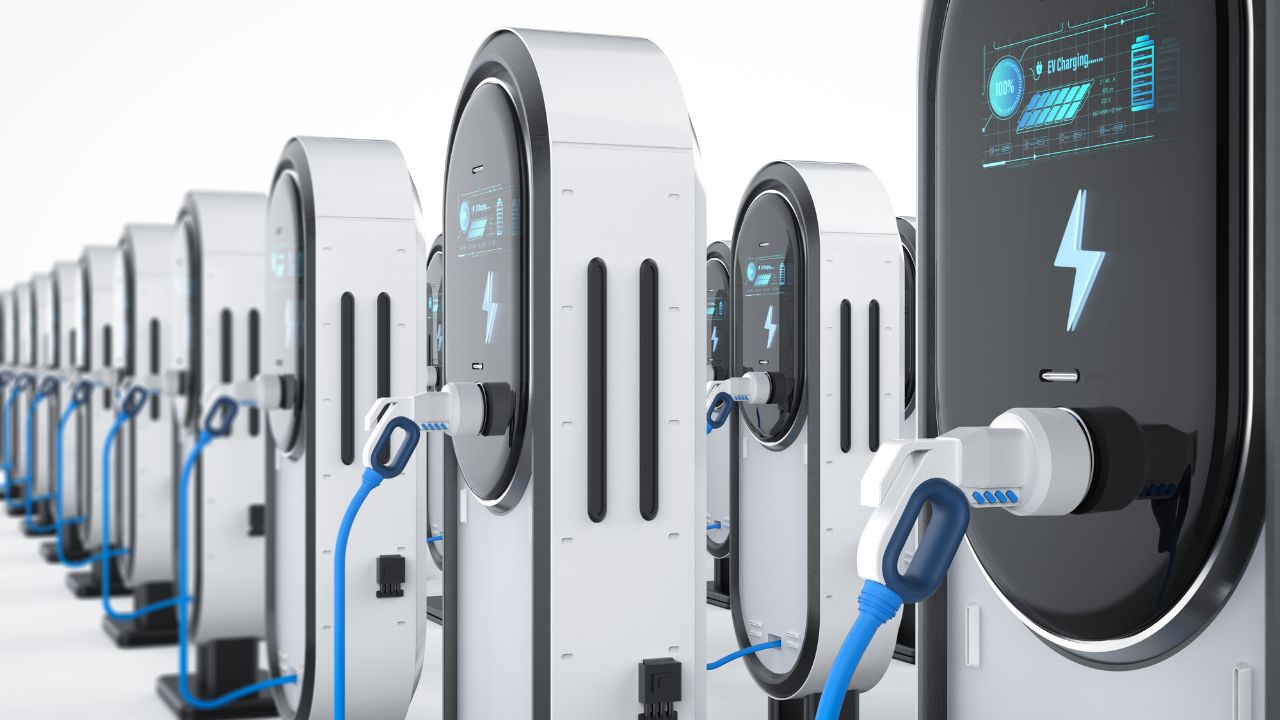
EV charging infrastructure and battery storage systems are the key to a cleaner future; however, these devices and their infrastructure are creating unintended side effects: severe noise pollution. Often found in densely populated urban areas already plagued with elevated ambient noise levels, these installations face strict municipal scrutiny. The continuous operation of inverters and high-capacity cooling systems generates significant sound levels that can impact both surrounding communities and personnel comfort. Furthermore, electronic equipment performance is directly impacted by temperature within the device. Acoustic treatments cannot simply ‘box in’ the equipment; materials addressing thermal conductivity and vital airflow are absolutely critical to consider. Maya Consulting leverages decades of expertise, best-in-class predictive analysis tools, and comprehensive engineering services to develop customized solutions that address these specific noise challenges, ensuring optimal acoustic conditions without compromising system performance.
Battery Energy Storage Systems (BESS)
Grid-scale and commercial Battery Energy Storage Systems (BESS) rely on a complex network of internal components to maintain safety and efficiency. Uninterruptable power supplies (UPS), load centers, power distribution banks, cooling systems, transformers, and other electro-mechanical devices all require dedicated noise reduction solutions. When these systems run continuously to manage thermal loads, they generate a persistent, low-frequency hum and structure-borne vibration that easily penetrates adjacent structures and crosses property lines.
The Compliance & Performance Risk: Low-frequency tonal noise and structure-borne vibrations from heavy-duty HVAC blowers and transformers frequently trigger residential noise complaints, leading to costly municipal stop-work orders or delayed project commissioning.
Thermal-Acoustic Interdependence: Because battery capacity degrades rapidly under heat stress, soundproofing cannot restrict ventilation. We engineer solutions where the acoustic absorption materials and barrier designs work in tandem with the facility’s thermal management requirements.
The Engineering Solution: We utilize predictive acoustic modeling prior to installation. Our engineers design custom vibration-isolated mounting pads, structural decoupling systems, and ventilated acoustic enclosures that mitigate sound propagation while maintaining the strict temperature controls required for high-voltage battery banks.
Commercial EV Fast-Charging Infrastructure
As the transition to electric mobility accelerates, developers are deploying high-capacity DC Fast Charging (DCFC) hubs in retail centers, parking garages, and tight urban corridors. To prevent thermal runaway during rapid charging cycles, these units rely on high-RPM internal cooling fans, liquid-cooling pumps, and compressors. While a single unit might pass local noise ordinances, a bank of ten or twenty chargers operating simultaneously creates a cumulative sound power level that almost guarantees regulatory friction.
- The Cumulative Acoustic Impact: When multiple chargers and their centralized power cabinets operate at peak capacity during high-traffic hours, the resulting broadband noise directly interferes with local zoning laws and boundary noise limits in NY and NJ.
- Site-Specific Diagnostics: Real-world acoustic performance varies dramatically based on surrounding reflective surfaces (like brick walls or concrete parking decks). We perform on-site Octave Band Analysis to isolate the exact offending frequencies causing the community disturbance.
- Architectural Remediation: We develop highly customized solutions to address these specific noise challenges. This includes engineering, architectural acoustic louvers, sound-absorbing barrier walls, and specialized airflow silencers that block noise without choking the critical ventilation needed for the chargers to function safely.
FAQ
Common Questions About EV & BESS Acoustic Compliance
Do Battery Energy Storage Systems (BESS) require a noise study for municipal approval?
Yes. Most municipalities in New York and New Jersey now require a predictive acoustic modeling study during the site plan approval phase. Townships want technical proof that the continuous, low-frequency hum of the BESS transformers and cooling systems will not violate property line noise ordinances, particularly at night.
Are commercial DC Fast Chargers really loud enough to cause noise violations?
Individually, a charger may not seem overly loud. However, when multiple DC Fast Chargers operate simultaneously during peak hours, the cumulative sound power of their internal cooling fans and compressors multiplies. In dense urban areas or mixed-use retail spaces, this cumulative noise frequently exceeds standard 50-65 dBA commercial boundary limits.
Can we just build a solid barrier wall around the charging station or battery container to block the sound?
No, this is a dangerous misconception. EV infrastructure and energy storage systems generate significant heat and require uninterrupted airflow to prevent thermal runaway and maintain performance. A solid wall traps heat, causing equipment failure. We engineer architectural acoustic louvers that absorb and block soundwaves while allowing the critical ventilation required for the systems to operate safely.
At what stage of the project should we hire an acoustic consultant?
You should engage us during the initial site design and permitting phase, before equipment is purchased or concrete is poured. Predictive noise modeling allows us to optimize the site layout—such as orienting the loudest equipment away from sensitive receivers—which is vastly cheaper than retrofitting acoustic enclosures after a noise complaint is filed.