
What Is Predictive Maintenance? Using Vibration Analysis to Prevent Machinery Failure
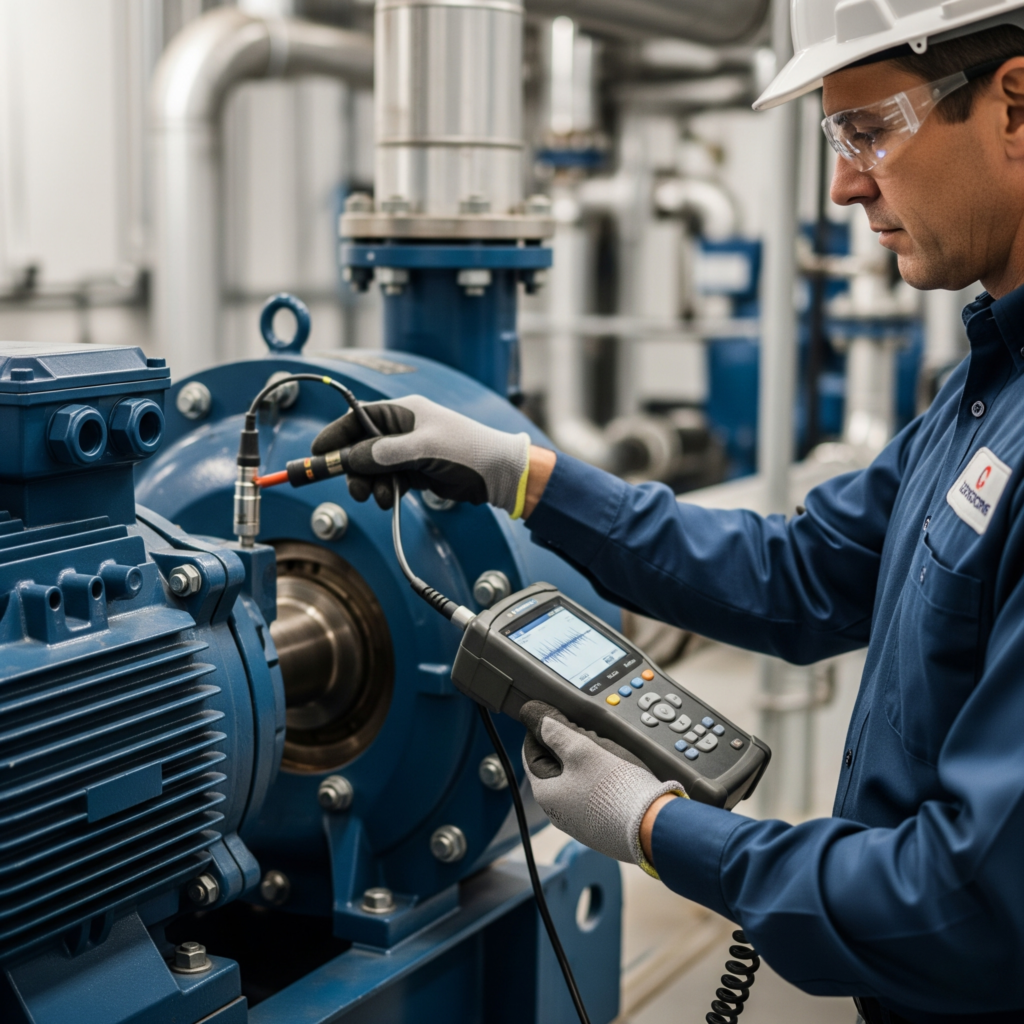
An industrial facility depends on its machinery. When equipment runs smoothly, production targets are met and operations are profitable. But what happens when a critical machine fails without warning? The costs add up quickly. You face unplanned downtime, expensive emergency repairs, and potential damage to other parts of the system. There is a better way to manage your assets. This article explains predictive maintenance, a modern strategy that helps you prevent machinery failure before it happens.
One of the most effective tools in a predictive maintenance program is vibration analysis. By monitoring and analyzing the vibration patterns of your equipment, engineers can identify developing faults with remarkable accuracy. This allows you to move from a reactive “fix-it-when-it-breaks” model to a proactive, data-driven approach that saves money, improves safety, and increases the lifespan of your valuable assets.
The Limits of Traditional Maintenance
To understand the value of predictive maintenance, it helps to first look at the two most common traditional maintenance strategies: reactive and preventive.
Reactive Maintenance: The High Cost of Waiting for Failure
Reactive maintenance is the simplest strategy: you run a machine until it breaks, then you fix it. This is also known as a “run-to-failure” approach. While it requires no upfront planning, it is by far the most expensive and disruptive way to manage industrial equipment.
When a machine fails unexpectedly, it triggers a cascade of negative consequences. Production stops instantly, leading to lost output and revenue. Repairing the equipment becomes an emergency, often requiring overtime pay for technicians and rush shipping for parts. A failure in one component, like a bearing, can also cause severe secondary damage to other parts of the machine, turning a small issue into a major overhaul. This approach offers no control and leaves a facility vulnerable to constant, unpredictable disruptions.
Preventive Maintenance: An Improvement with Flaws
Preventive maintenance is a more structured approach. Maintenance tasks are performed on a fixed schedule, based on time intervals or operational hours. For example, a motor might be scheduled for bearing lubrication every six months, regardless of its actual condition.
This strategy is an improvement over reactive maintenance because it helps prevent some failures. However, it has significant drawbacks. First, it often leads to unnecessary work. A perfectly healthy machine may be taken offline for service, wasting labor hours and valuable production time. Technicians might replace components that still have significant operational life left in them. Second, preventive maintenance does not eliminate all unexpected failures. It cannot account for issues caused by improper installation, defective parts, or unusual operating stress. A machine can still fail between its scheduled service dates.
A Smarter Strategy: What Is Predictive Maintenance?
Predictive maintenance offers a solution to the shortcomings of older strategies. It is a proactive approach that uses condition-monitoring tools and data analysis to track the performance of equipment during normal operation. The goal is to detect the earliest signs of degradation so that repairs can be scheduled before a failure occurs.
Instead of relying on a calendar, predictive maintenance relies on data. It answers the question, “What is the actual condition of this machine right now?” By collecting and analyzing data points like vibration, temperature, and oil quality, engineers can spot subtle changes that indicate a developing problem. This data-driven insight allows a facility to perform maintenance at the exact moment it is needed—not too early and not too late.
Vibration Analysis: Listening to the Health of Your Machines
Nearly all industrial equipment failures are preceded by changes in the machine’s vibration. A healthy machine has a consistent, stable vibration “signature.” When components begin to wear or fail, this signature changes in predictable ways. Vibration analysis is the process of measuring, processing, and interpreting these vibration signals to diagnose the health of machinery.
It is one of the most powerful techniques available for a predictive maintenance program because it can detect a wide range of mechanical and electrical faults long before they become critical.
How Does Vibration Analysis Work?
The process uses specialized equipment and requires expert analysis, but the core concept is straightforward.
- 1. Data Collection: An engineer or technician uses a portable data collector and sensors called accelerometers. These sensors are placed on specific points on the machinery, typically at the bearing locations. The sensors measure the machine’s vibration in terms of amplitude (how much it’s vibrating) and frequency (how fast it’s vibrating).
- 2. Data Processing: The collected data is uploaded to software that performs a Fast Fourier Transform (FFT). This mathematical process converts the complex vibration signal from a time-based waveform into a frequency spectrum. This spectrum is a graph that shows all the different frequencies of vibration and their corresponding amplitudes.
- 3. Data Interpretation: A trained analyst examines the vibration spectrum. This is the most critical step. Different mechanical components (such as bearings, gears, belts, and motor rotors) vibrate at specific, calculable frequencies. By matching the peaks on the spectrum to these known frequencies, the analyst can pinpoint exactly which component is generating the vibration and assess its condition.
For a deeper understanding of the science behind this process, professional organizations like the Vibration Institute provide extensive resources and training. This expert interpretation is key to a successful predictive maintenance program.
Common Problems Identified Through Vibration Analysis
A change in a machine’s vibration signature is a direct symptom of a mechanical issue. Here are some of the most common faults that vibration analysis can detect weeks or even months before a failure.
- – Imbalance: When a rotating part, like a fan or a pump impeller, has a heavy spot, it creates a strong vibration at exactly one times the machine’s running speed. This is similar to an unbalanced tire causing a car to shake.
- – Misalignment: If the shafts of a motor and a pump are not precisely aligned, it creates high vibration at one, two, and sometimes three times the running speed. Misalignment puts enormous stress on bearings and couplings, leading to premature failure.
- – Bearing Defects: As the rolling elements and races of a bearing begin to wear, they generate very specific, high-frequency vibrations. Vibration analysis can identify the exact location and severity of the defect, allowing for planned replacement.
- – Mechanical Looseness: If a machine’s mounting bolts are loose or if there is excessive clearance in a bearing housing, it produces a distinct vibration pattern that an analyst can easily identify.
- -Gear Wear: Damaged or worn gear teeth create vibration at a frequency known as the Gear Mesh Frequency (GMF), which is the number of teeth multiplied by the gear’s speed.
By identifying these specific issues, a predictive maintenance program allows you to plan the exact repair needed, order the correct parts, and schedule the work for a convenient time.
The Business Advantages of Predictive Maintenance
Implementing a predictive maintenance program using vibration analysis is an investment that provides a significant return. It transforms the maintenance department from a reactive cost center into a proactive contributor to the company’s bottom line.
- – Reduces Unplanned Downtime: This is the most immediate and impactful benefit. By catching faults early, you can schedule repairs during planned outages, maximizing production time.
- – Increases Equipment Lifespan: Small, correctable issues like misalignment can lead to catastrophic failures if left unchecked. Predictive maintenance helps you fix these small problems, extending the life of your most critical assets.
- – Lowers Maintenance Costs: You eliminate the high costs of emergency repairs, overtime labor, and rush shipping for parts. You also stop spending money on unnecessary preventive maintenance tasks, servicing equipment only when the data shows it is needed.
- – Improves Workplace Safety: A machine that fails unexpectedly can create a serious safety hazard. Preventing these failures protects your employees from potential injury.
- – Optimizes Spare Parts Inventory: A predictive maintenance program tells you which parts you will need for future repairs. This allows you to reduce your on-hand inventory, freeing up capital.
How to Implement a Vibration Analysis Program
Getting started with predictive maintenance does not have to be complicated. A successful program can be built with a few logical steps.
- 1. Identify Critical Equipment: You do not need to monitor every machine in your facility. Start with the assets that are most critical to your operation—the ones whose failure would cause the most significant disruption.
- 2. Establish a Baseline: The first step in monitoring is to collect vibration data on your critical machines while they are in a healthy condition. This baseline data provides the “normal” vibration signature against which all future readings will be compared.
- 3. Determine Monitoring Frequency: The schedule for data collection depends on the criticality of the machine. The most vital equipment might be monitored monthly, while less critical assets could be checked quarterly.
- 4. Partner with Experts: Interpreting vibration data is a specialized skill that requires certified analysts and sophisticated software. Partnering with an experienced engineering consultant gives you access to this expertise without the high cost of building an in-house team. An expert can help you set up your program, analyze the data, and provide clear, actionable repair recommendations.
Take Control of Your Machinery's Health
Unexpected equipment failure is a major source of financial loss and operational stress for any industrial facility. A predictive maintenance strategy, driven by powerful tools like vibration analysis, allows you to move beyond reactive repairs and take control of your asset management.
By listening to what your machines are telling you, you can identify problems early, schedule repairs on your own terms, and prevent catastrophic failures. This proactive approach protects your equipment, enhances safety, and directly improves your profitability.
If you are ready to reduce downtime and lower your maintenance costs, learn more about our Industrial Noise & Vibration Control services. Our team of experts can help you design and implement a predictive maintenance program to keep your facility running smoothly and efficiently. To discuss your specific needs, schedule a consultation with us today.