Biotechnology & Life Sciences Facilities
Home / Industries / Biotechnology
VIBRATION ISOLATION & ENVIRONMENTAL CONTROL FOR BIOTECH ENVIRONMENTS
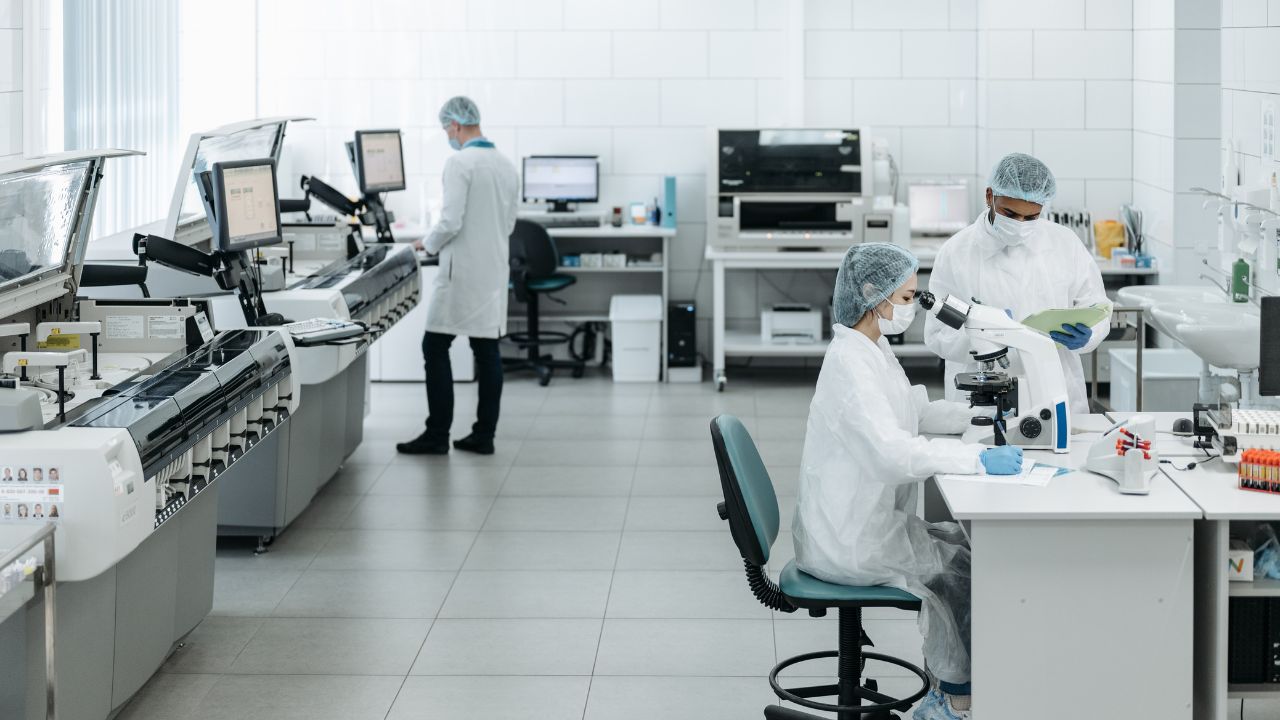
The biotechnology industry operates at the intersection of engineering and life sciences, where precise environmental control is the foundation of therapeutic development. From sensitive cell culture incubators to high-resolution microscopy suites, microscopic vibrations and acoustic interference can ruin months of research, cause highly sensitive analytical equipment to fail calibration, and induce stress on biological systems. Maya Consulting delivers the specialized acoustic mitigation and structural isolation engineering required to protect your data integrity, ensure reproducible research outcomes, and maintain the strict contamination protocols essential for FDA and ISO compliance.
High-Resolution Microscopy & Analytical Equipment
High-resolution imaging systems (such as confocal, electron, and super-resolution microscopes) and sensitive analytical tools (mass spectrometers) require sub-micron vibration isolation to achieve nanometer-scale precision.
The Data Integrity Risk: Even minor structure-borne vibrations from foot traffic, nearby HVAC systems, or adjacent street transit can cause severe image blurring, failed equipment calibrations, and compromised cellular analysis.
The Engineering Solution: We conduct highly precise site vibration surveys (evaluating against stringent VC-A through VC-G criteria) and design specialized active and passive isolation platforms tailored to the exact resonant frequencies of your instrumentation.
Bioreactor Isolation & GMP Cleanroom Stability
As the transition to electric mobility accelerates, developers are deploying high-capacity DC Fast Charging (DCFC) hubs in retail centers, parking garages, and tight urban corridors. To prevent thermal runaway during rapid charging cycles, these units rely on high-RPM internal cooling fans, liquid-cooling pumps, and compressors. While a single unit might pass local noise ordinances, a bank of ten or twenty chargers operating simultaneously creates a cumulative sound power level that almost guarantees regulatory friction.
- The Facility Risk: Structure-borne vibration from heavy bioprocessing equipment can propagate through the building slab, interfering with delicate cell cultures in neighboring suites and disrupting nearby analytical labs.
- The Engineering Solution: We engineer structural decoupling strategies, heavy-duty inertia bases, and seismic restraint systems that isolate high-impact processing equipment from the rest of the facility without compromising sterile cleanroom boundaries or architectural integrity.
FAQ
Common Questions About Biotech Vibrations and Acoustics
What Vibration Criterion (VC) standard does my laboratory need?
It depends entirely on your equipment. Standard optical microscopes typically require VC-A (2,000 micro-inches/sec). However, advanced Scanning Electron Microscopes (SEMs) or nanolithography tools often require VC-D or VC-E environments. We perform site baseline testing to determine your facility’s current VC rating before designing mitigation strategies.
Can you retrofit vibration isolation into an existing cleanroom?
Yes, though it requires precise engineering to avoid breaching containment. We design custom pneumatic isolation platforms, active cancellation pedestals, and localized acoustic enclosures that can be integrated into existing GMP suites without requiring a total facility shutdown.
Does acoustic noise actually affect cell cultures?
Yes. High-decibel acoustic noise translates into physical vibration when soundwaves strike incubators and fluid vessels. This micro-vibration can induce sheer stress on sensitive cell lines, altering cell metabolism, growth rates, and ultimately compromising experimental reproducibility.
Can you retrofit existing facilities?
Yes—we design isolation platforms and acoustic treatments that integrate into active research spaces with minimal disruption.